

It was 1917 when the Society of Independent Artists received an object that did not go unnoticed.
The Society of Independent Artists of New York was founded in 1916, following the French model in which there was neither a jury nor prizes, with the sole aim of promoting modern art without censorship. They stated that any work of art would be exhibited as long as its creator paid the entry fee. However, the society broke its commitment when they received a work for the 1917 exhibition and rejected it.
The submitted piece was an inverted porcelain male urinal titled Fountain.
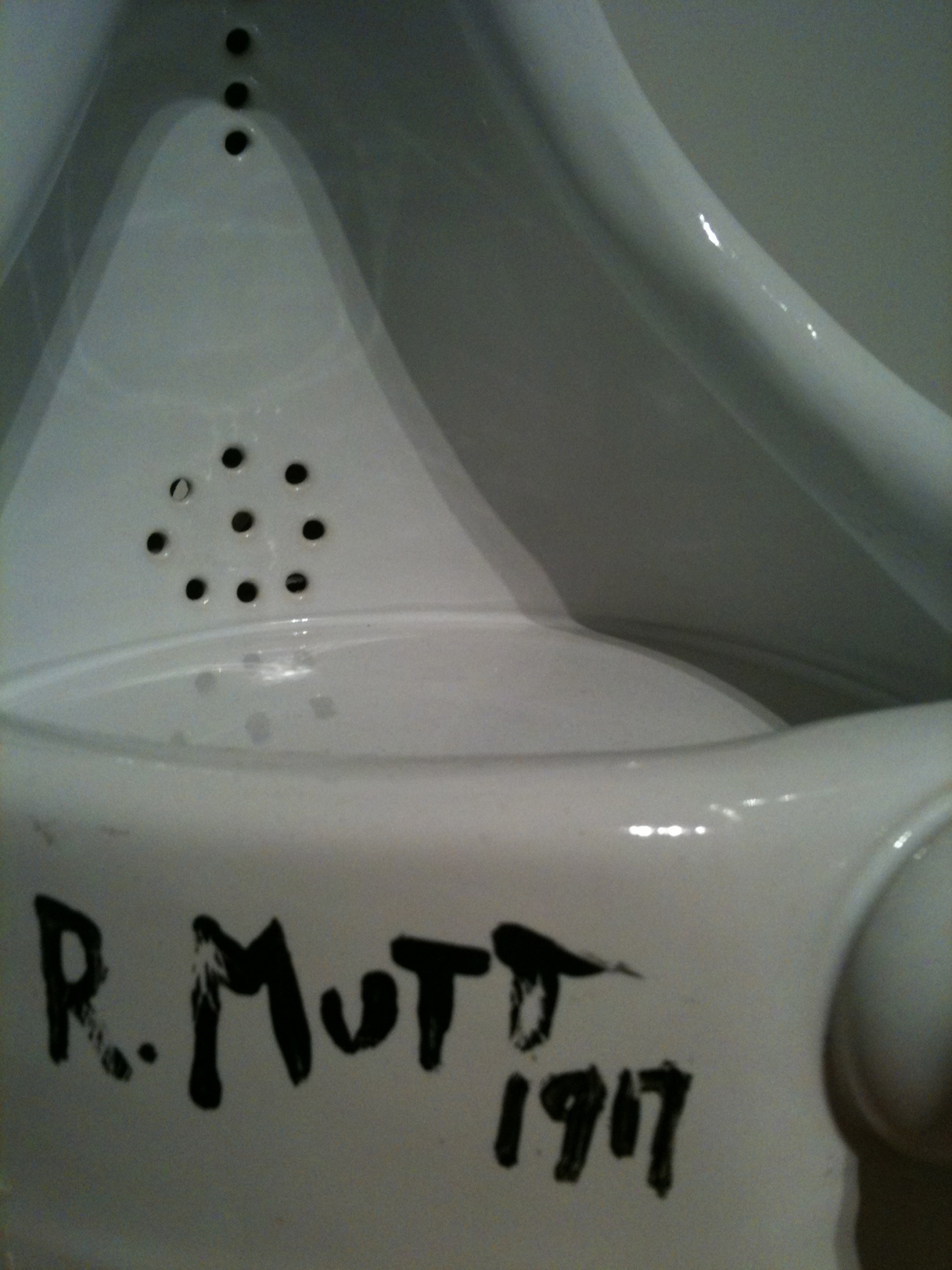
This work was sent anonymously but was later attributed to Marcel Duchamp. When the board argued that it was not a true work of art and that it was merely a joke by an artist, Duchamp who was part of the jury at the time along with his friend Walter Arensberg, protested against the censorship.
Fountain was signed under the pseudonym R. Mutt. This is a play on words derived from Mott Works, a company that manufactured sanitary equipment, and the comic “Mutt and Jeff,” which featured two characters, one of whom Mutt was a tall swindler. The “R” is believed to come from Richard, a colloquial French term used to refer to a wealthy man.
Despite being rejected, the controversy surrounding Fountain changed the perception and values of art, making it the first conceptual artwork.
It challenged and questioned art by attempting to elevate an everyday object to the status of a museum piece. Marcel Duchamp introduced a new concept: the “readymades,” objects removed from their original context and function in order to be given artistic meaning. The artist argued that greater importance should be given to the idea behind a work of art than to the object through which it is materialized.

It was in the 1930s and not before, partly due to his involvement on the jury that Duchamp claimed authorship of the work, describing it as “his greatest achievement.” However, there is another theory that attributes the work to Baroness von Freytag-Loringhoven. In a letter Duchamp wrote to his sister, he stated that it was she who anonymously sent the urinal from Philadelphia. Nevertheless, the Baroness was not shy, so if the work had been hers, it is unlikely she would have remained silent. Could it then have been a collaborative work? Art historians have yet to reach a consensus.
One way or another, Fountain is now considered the most influential artwork of the 20th century. It revolutionized and challenged art, becoming one of the earliest examples of conceptual art.